
Collection Architecture: Building Winning Furniture Ranges
Deepak Madnani, DeepGreen Design
Oct 25, 2026
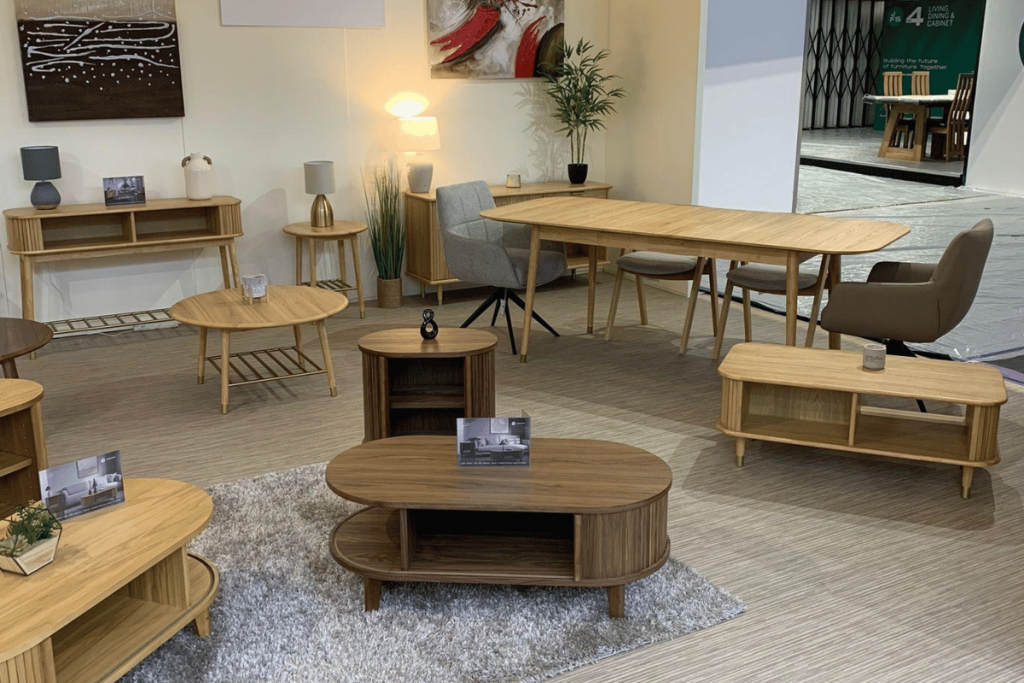
A furniture retailer can have several well-designed products and still struggle to build a successful collection.
The reason is often not the individual products. It is how those products work together.
A dining table may perform well on its own, a particular chair may attract attention, and a sideboard may have strong visual appeal. But when these products are placed within the same retail range, do they share a clear design identity? Do they serve different price points? Can they be presented together in a showroom or catalogue? And do they give buyers enough choice without creating unnecessary complexity?
These are the questions behind furniture collection architecture.
Leading furniture retailers do not approach product ranges as a simple list of items to purchase. They consider how each product contributes to the overall collection, how categories complement one another, and how the range supports their commercial objectives.
The result is a more intentional product portfolio: one that gives shoppers a coherent experience while helping retailers manage category planning, pricing and future range development.
1. Start With a Clear Collection Identity
Every successful furniture range needs a recognisable identity.
This does not mean every product should look identical. Instead, the collection should have a consistent design language that connects its individual pieces.
That connection can come from several elements:
- A shared approach to proportions and silhouettes.
- Consistent material choices and finish combinations.
- Repeated design details, such as leg profiles, handles or edge treatments.
- A recognisable balance between traditional and contemporary influences.
- A consistent visual direction across different furniture categories.
For example, a contemporary dining collection might combine rounded edges, natural wood finishes and understated metal details. Dining tables, chairs, cabinets and occasional furniture can each have their own character while still feeling like part of the same family.
This matters because retailers are not only presenting individual products. They are presenting a style and an overall shopping experience.
Without a clear identity, a range can feel like a collection of unrelated purchasing decisions rather than a considered product offering.
2. Build the Range Around Category Roles
A well-planned collection needs more than a strong visual direction. Each category should have a clear purpose.
Leading retailers consider how different products contribute to the overall range and how customers might move between them.
A dining collection, for instance, could include:
- Dining tables as the central category.
- Dining chairs that complement the tables and offer different seating options.
- Sideboards that extend the collection into storage.
- Display cabinets that add another functional category.
- Occasional pieces that create opportunities for further purchases.
The objective is not to include as many products as possible. It is to create a meaningful selection in which each category supports the others.
This approach also helps identify gaps. If a collection has several dining tables but limited seating options, the range may feel incomplete. If every category offers nearly identical products, the retailer may be creating unnecessary overlap.
Category planning helps retailers make more deliberate decisions about what belongs in a collection, what should be developed next and what does not add enough value.
3. Create a Balanced Price Architecture
A collection should give retailers options at different commercial levels.
If every product sits at the same price point, the range may struggle to serve different customer segments. On the other hand, introducing products across several price levels without a clear structure can make the collection feel inconsistent.
A considered price architecture creates a relationship between entry-level, mid-range and premium products.
For example, a dining range could include a more accessible table with a straightforward finish, a mid-range option with additional material detailing, and a premium design featuring more distinctive construction or material combinations.
These products should not simply differ in price. Each should offer a clear reason for its position within the range.
Retailers should consider the relationship between:
- Target retail price.
- Material selection and finish quality.
- Construction and engineering requirements.
- Design details and perceived value.
- Manufacturing complexity.
- Expected commercial performance.
The key is to ensure that each price level has a clear role. A premium product should communicate why it sits above the entry-level option, while a more accessible product should still meet the retailer's expectations for design and performance.
4. Balance Variety With Consistency
One of the most common challenges in furniture range planning is deciding how much variety to introduce.
Too little variety can make a collection feel repetitive. Too much can weaken its identity and make the range harder to manage.
Leading retailers look for variety within a consistent design framework.
This could mean offering different table sizes, chair configurations, finishes or storage options while retaining recognisable design details across the collection.
Consider a collection built around a particular wood finish and metal detailing. It could include several table formats, different chair silhouettes and multiple storage pieces. The products would serve different needs, but the shared design language would make the collection feel connected.
This is where range planning becomes especially important. Retailers need to understand which differences create meaningful choice and which simply create more product variations without adding much value.
A successful range gives buyers enough flexibility to select products for their market while preserving a clear overall identity.
5. Design for Cross-Category Compatibility
A product may look impressive individually but still struggle to work within a wider collection.
This is why leading retailers consider compatibility early in the planning process.
For example, a dining table and chair combination should be evaluated together. Their proportions, heights, finishes and visual balance need to work as a complete setting.
The same principle applies across other categories. A sideboard should complement the dining range, while occasional furniture should feel connected without appearing like a direct copy of another product.
Retailers should evaluate products in different ways:
As individual products: Does each item have a clear purpose and a reason to be included?
As coordinated pieces: Do the products work visually and functionally when presented together?
As a complete range: Does the collection offer enough category depth, variety and price choice?
Thinking across these three levels helps prevent a common problem: developing attractive individual products that do not create a strong retail collection when brought together.
6. Consider the Showroom and Online Experience
Collection architecture should also reflect how products will be presented and sold.
In a physical showroom, products need to work together visually. Buyers should be able to create coordinated room settings, understand the relationship between categories and identify complementary products.
Online, the same collection needs to be easy to navigate. Product photography, category organisation, finish options and related-product recommendations all influence how shoppers understand the range.
This means collection planning should consider presentation from the beginning rather than treating it as a final marketing task.
A retailer might have an excellent range of dining furniture, but if the products are difficult to group into clear settings or the visual relationship between them is unclear, the collection may not communicate its full value.
When product development and retail presentation are considered together, the result is a range that is easier to merchandise, explain and sell.
7. Plan for Future Collection Development
A strong collection should not be viewed as a one-time launch.
Retailers need to consider how a range can evolve as market preferences, category performance and commercial priorities change.
This does not mean adding products continuously. It means understanding where the collection has room to grow and which additions would strengthen its overall structure.
For example, sales performance may reveal that a particular dining table is performing well but the collection lacks complementary storage options. Another category may have too many similar products and require a more focused selection.
Useful questions include:
- Which products are performing well across the range?
- Are there categories that need more depth?
- Are two or more products competing for the same position?
- Are the price levels still relevant to the target market?
- Would a new product strengthen the collection or dilute its identity?
- Can the existing design language be carried into another category?
Reviewing these questions helps retailers make informed decisions about future development rather than relying on isolated product launches.
8. Bring Design, Commercial Planning and Manufacturing Together
Collection architecture is most effective when design decisions are connected to commercial and manufacturing considerations.
A visually consistent range may still be difficult to execute if products require unrelated materials, complicated construction methods or different production capabilities.
Similarly, a commercially attractive price structure may be difficult to achieve if the underlying designs are not engineered with manufacturing requirements in mind.
Retailers and their development partners should consider these factors together:
Design direction: Does the collection have a recognisable identity?
Category planning: Does each product serve a clear role?
Commercial positioning: Are the products aligned with target retail prices and market expectations?
Engineering: Can the products be developed with reliable construction and practical assembly?
Manufacturing: Can the range be produced with consistent standards across its different categories?
When these considerations are aligned, collection planning becomes more structured. It gives retailers a stronger foundation for launching products and managing the range over time.
How DeepGreen Design Helps Brands Launch Retail-Ready Products
As furniture brands grow, managing suppliers, quality checks and production while adhering to industry requirements can become increasingly difficult. DeepGreen was established to make this process easier and help brands grow confidently.
DeepGreen brings together the capabilities brands need to expand their product ranges through one coordinated system.
White Label Collections
DeepGreen offers more than 30 retail-ready and manufacturing-ready collections that help brands launch products quickly without lengthy development cycles. These collections are designed with commercial performance, manufacturing efficiency and retail success in mind.
For retailers planning their product ranges, this provides an established starting point for evaluating different categories, styles and product opportunities.
Design and OEM Studio
With more than 15 years of experience supporting global furniture brands, DeepGreen's Design and OEM Studio helps transform concepts into market-ready products.
Whether developing entirely new products or refining existing ideas, the same disciplined process is followed. Products are engineered with commercial success and manufacturing reliability in mind, helping brands connect their design direction with practical production requirements.
Manufacturing+ Supplier Network
DeepGreen provides access to trusted suppliers, diverse capabilities and secured production capacity through one coordinated system.
This simplifies sourcing while improving manufacturing consistency, giving brands a more organised way to manage the production requirements of their furniture ranges.
DeepGreen Standard
The DeepGreen Standard governs every stage of development and production. It includes design reviews, prototyping, quality inspections, testing, compliance verification and packaging validation.
The process is designed to reduce risk and improve long-term product performance, helping brands maintain consistent quality as they scale.
By bringing these capabilities together, DeepGreen helps furniture brands connect collection planning, product development and manufacturing within a more coordinated process.
Conclusion: Winning Ranges Are Built With Intent
Successful furniture retailers understand that a strong product range is not defined by the number of products it contains.
It is defined by how well those products work together.
A clear design identity, considered category roles, balanced price positioning and meaningful variety all contribute to a collection that is easier to present, manage and develop.
Most importantly, collection architecture gives retailers a framework for making better product decisions. Instead of adding products individually, they can build ranges with a clear purpose and a stronger connection to their market.
For furniture brands looking to grow, the question should not simply be which product to launch next. It should be how that product strengthens the collection as a whole.
Frequently Asked Questions
1. What is furniture collection architecture?
Furniture collection architecture is the strategic planning of a product range. It defines how different furniture products, categories, styles and price points work together to create a coherent and commercially relevant collection.
2. Why is collection architecture important for furniture retailers?
It helps retailers create a consistent product offering, avoid unnecessary overlap, identify category gaps and provide customers with a clearer selection. It also supports better range management and future product planning.
3. How many products should a furniture collection include?
There is no fixed number. The right range size depends on the retailer's market, category focus, price positioning and merchandising strategy. The priority should be meaningful product variety rather than simply increasing the number of items.
4. How do retailers maintain consistency across different furniture categories?
Retailers can establish a shared design language through consistent materials, finishes, proportions and design details. Products should also be reviewed together to ensure they work as coordinated pieces within the wider collection.
5. How can a furniture development partner support collection planning?
A development partner can help translate a retail strategy into product concepts, engineering requirements, material decisions and manufacturing plans. This connects the collection's design direction with the practical requirements of bringing products to market.
Let's collaborate on your next product line.
Tell us what you have in mind and we'll make it happen.